
Limited openings each listening season
Know where key species are calling — and how to manage for them
Typical fit: 100+ acres, public or private working lands.
Spatial insights & connectivity
See how birds (like these bobwhites) are using and moving around on your property.
- Northern Bobwhite
- Wild Turkey
- Ruffed Grouse
- And more
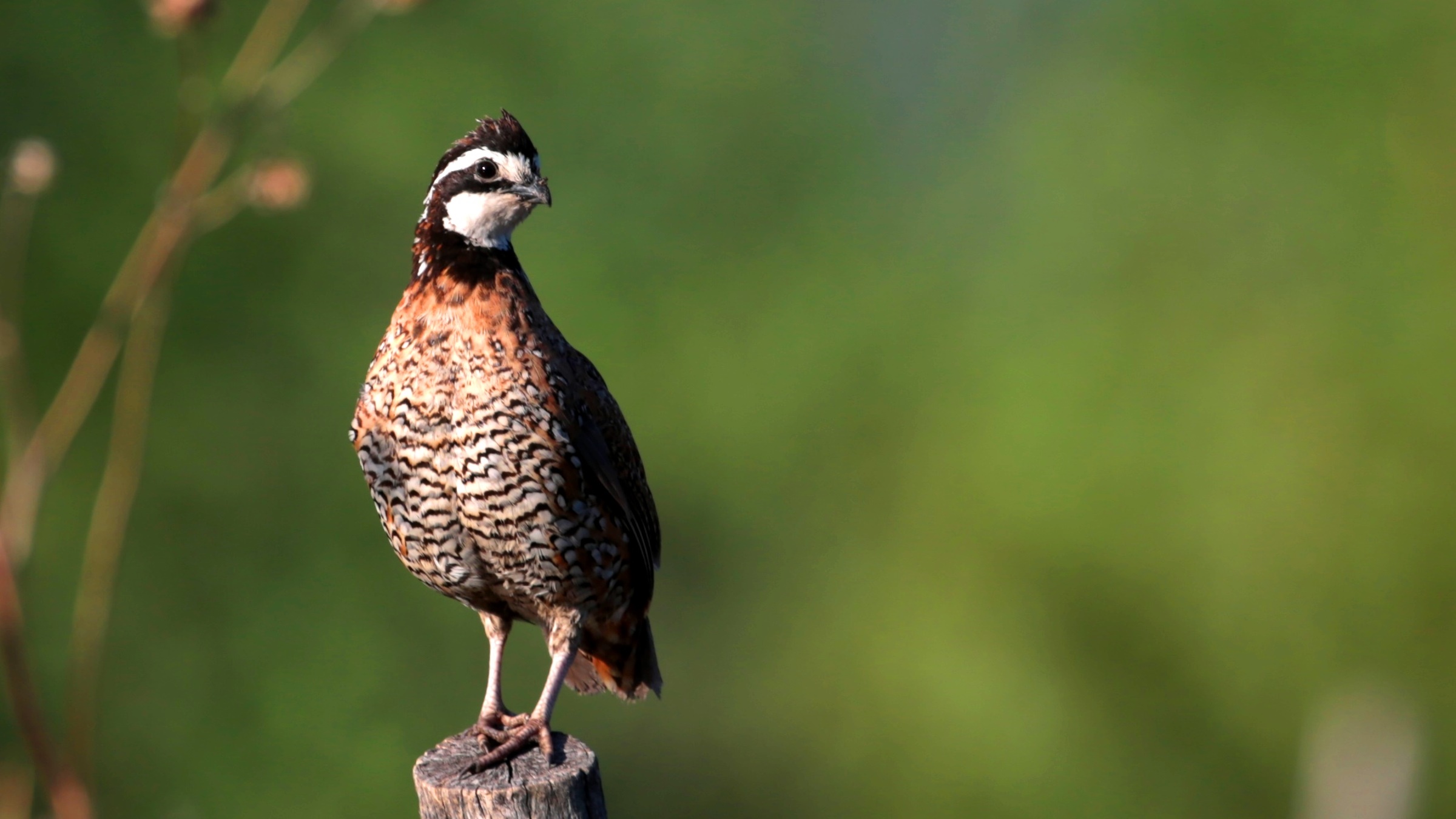

Hear bobwhite calls
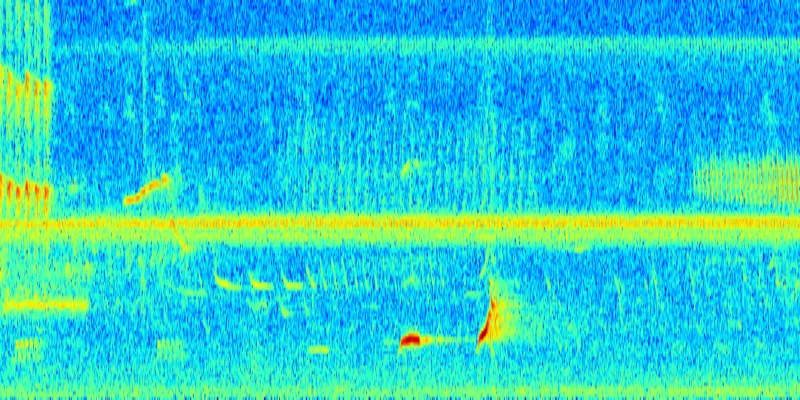
Spectrogram of bobwhite calls
Biodiversity & multi-year tracking
See if your habitat work is resulting in increased bird populations.

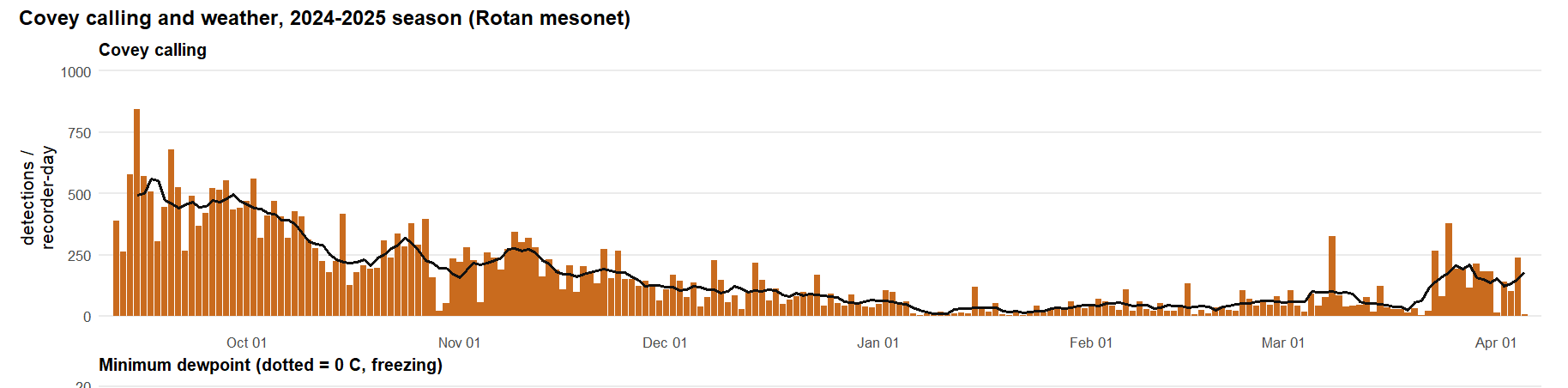
Far greater insight than traditional surveys
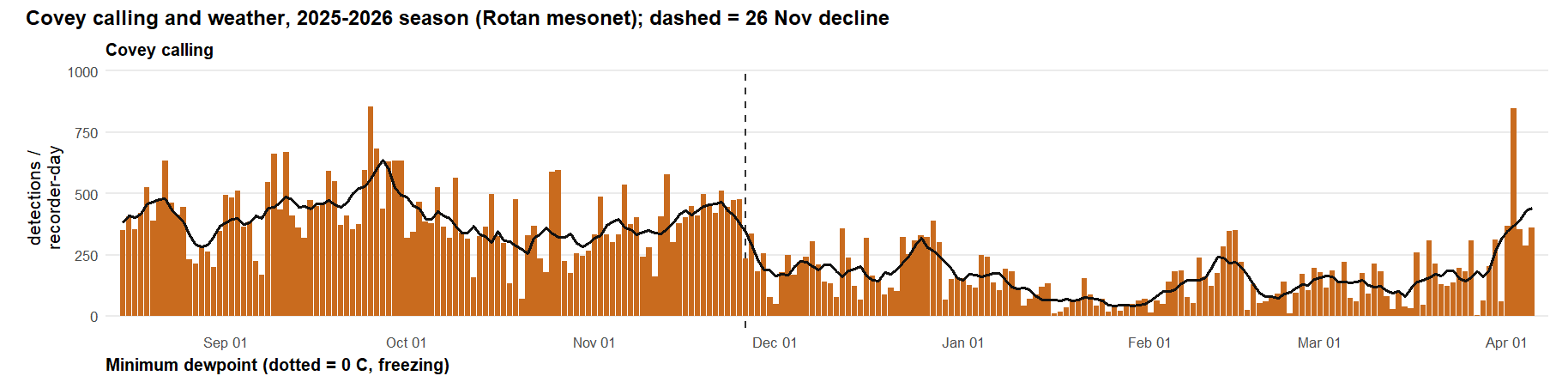
Continuous listening can catch smaller population shifts (~12%) than traditional surveys (~26–28%) — so you see change earlier and manage with more confidence.
Minimum detectable change (Northern Bobwhite — power analysis, manuscript in peer review)
Acoustics
~12%
Most sensitive — finer resolution of population change.
Helicopter
~26%
Typical detection threshold from method comparisons.
Covey call surveys
~27%
Traditional ground survey sensitivity.
Roadside counts
~28%
Roadside count detection threshold.
Lower % = smaller shifts you can detect. Acoustics catches change earlier than traditional methods.
What people say
“Dr. Macaulay has also been instrumental in spearheading acoustic monitoring of northern bobwhite populations, an innovative and rapidly evolving approach that will help us track population trends and inform management actions in the future.”
“Luke has been crucial to helping me with both of my farms — to build better habitat. The programs are full of details and to the point… They work!”
“Luke has done a phenomenal job of bringing land managers of all stripes together to share words of wisdom. I am very grateful for the prescribed fire, grassland bird habitat, and other great knowledge sharing.”
Property fit form
All fields are required. Fit requests are reviewed personally. We only move forward with landowners, land managers, and agencies ready to invest in deployments starting at a minimum of $10,000 and prepared to start within 60 days — capacity is limited.
Request received
Thank you. We’ll email or call if there’s a fit to schedule a short consult. Capacity is limited, so not every property is accepted this season.
Questions in the meantime? luke@landwildlife.com