Private landowners, Mid-Atlantic
Tracked bobwhite quail survival after a brutal winter ice storm
Also maps turkey calling activity across the property

Limited season · Selective capacity
Actionable insights from acoustic listening — so you can manage with confidence
We take a limited number of properties each listening season. For landowners, land managers, and agencies who want actionable insights — not just detections — so you can make clear habitat and wildlife management decisions on the ground. Typical fit: 100+ acres, public or private working lands.
Species insight
Continuous acoustic records turn calling activity into actionable insights — when key game and non-game birds are present, how activity shifts across the season, and where to focus habitat work so management effort actually lands.
Map covey and whistle calling for bobwhite, follow gobbling for turkey, and track drumming and calling for grouse — including survival and rebound signals after hard winters — so cover, food-plot, burn, roost, and access decisions land where activity actually concentrates.
Hear a sample recording
Soundscape view
The same listening network that tracks management targets also reads the wider bird community. Long-term calling patterns reveal presence, absence, and change — actionable signals for habitat quality that occasional morning surveys can miss.
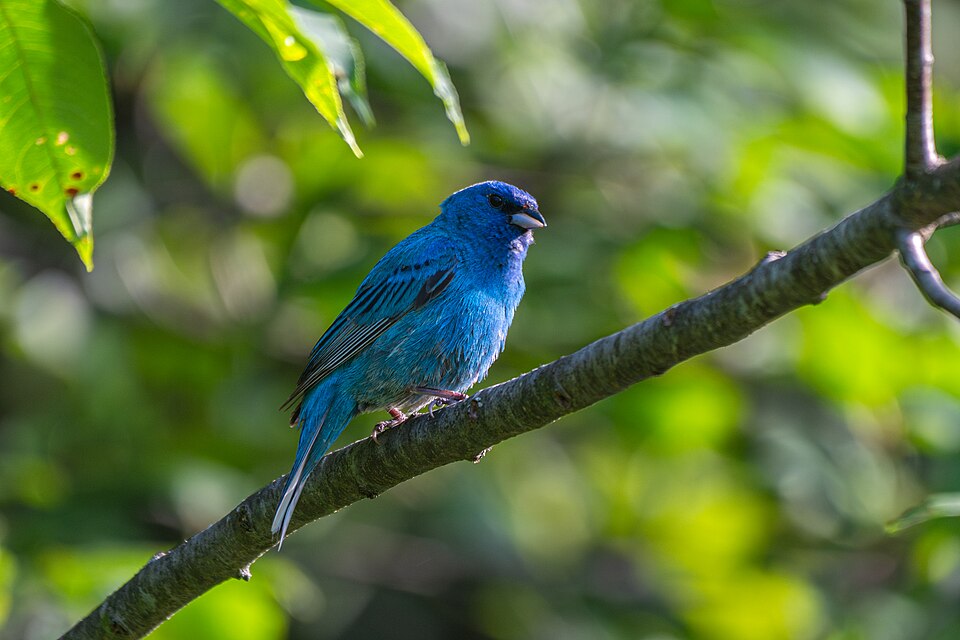
Indigo Bunting is a clear example: multi-year daily detections show seasonal calling peaks and year-to-year shifts — insight you can use to judge whether edge, shrub, and early-successional habitat is working beyond a single target species.
Photo: Tyler Savitski / Wikimedia Commons, CC BY-SA 4.0

Management meaning
Detections alone are not a plan. We translate calling into actionable insights — where activity concentrates, how seasons compare, and what to do next on the ground.
Year-to-year context keeps you from over-reading a quiet season or missing a rebound. Comparing covey calling tops across seasons separates habitat signal from noise — so management decisions rest on real patterns, not a single bad week.

Scientific advantages of continuous acoustic monitoring — actionable insights so your management decisions rest on stronger evidence.
Acoustic approach
~12%
Detected bobwhite population changes as small as about 12% in published work.
Helicopter surveys
~26%
Next-best option typically achieves a detection threshold around 26%.
That means acoustic monitoring can reveal meaningful population trends earlier, with substantially lower cost and disturbance than aerial surveys. Precision still depends on study design, habitat, and season — and results on any one property vary.
Results vary by property, season, habitat, and effort. Outcomes are not guaranteed.
Tracked bobwhite quail survival after a brutal winter ice storm
Also maps turkey calling activity across the property
Bobwhite and songbird presence monitoring
Presence and activity baselines across public land units
Bobwhite population change analyzed with greater precision than other methods used there
Longer listening windows reveal trends occasional surveys miss
We run the full listening season end to end — and turn it into actionable insights you can manage from:
Led by Dr. Luke Macaulay, Ph.D. — Extension Specialist at UC Berkeley and the University of Maryland, where he earned tenure, then went all-in on entrepreneurship building Land & Wildlife. Three years proving these methods on a ~1,000-acre working farm (research partnership).
All fields are required. Fit requests are reviewed personally. We only move forward with landowners, land managers, and agencies ready to invest in deployments starting at a minimum of $10,000 and prepared to start within 30 days — capacity is limited.
Thank you. We’ll text or call if there’s a fit to schedule a short consult. Capacity is limited, so not every property is accepted this season.
Questions in the meantime? luke@landwildlife.com